History behind Tea Ceremonies
The first written record of a Chinese tea ceremony dates all the way back to the Tang Dynasty, a whopping 1,200 years ago. The symbolism behind a tea ceremony is that the couple essentially promises to carry forward their family’s values of respect and harmony. Tea ceremonies reminds us that while weddings celebrate two people in love, they celebrate the families and histories that molded them too. This is what makes tea ceremonies so powerful.
Tea ceremonies are one of my favorite events to photograph. They are deep rooted in many Asian cultures. I have hosted a fusion tea ceremony to blend my husband and I’s cultures, and have also had the privilege of photographing traditional and modern tea ceremonies. Many Asian countries, such as Vietnam, China, and Korea, celebrate weddings with tea ceremonies, each with their own nuances.
No matter which culture, the premise behind tea ceremonies is the same: bring together both sides of the family to honor parents, elders, and ancestors. Though the ceremony itself typically only lasts about 30 minutes, it’s packed with symbolic gestures and meaning. Whether you want to do a more traditional ceremony with door games or catching walnuts and dates, or a more modern version to pay respects to your parents and grandparents, you’ll be happy your tea ceremony is photographed to look back upon for years to come.
Build time into your tea ceremony so that it’s an enjoyable experience for everyone. Elders really cherish this tradition; make sure to take your time and don’t rush!
When do tea ceremonies happen?
Tea ceremonies are usually held in the morning on an auspicious day. However, in the modern and Western world, some couples choose to have their tea ceremonies during their Western ceremonies, or even during their wedding reception.
Other couples will also choose to host their tea ceremony on a separate day from their Western wedding ceremony. There is no right or wrong way to host the tea ceremony. Here are some factors to consider when deciding to host it on two separate days or one:
- Number of people (bridesmaids/MIL/siblings) who need to get hair and makeup done. Everyone will need to be finished at least an hour before the ceremony, which could make for a long day.
- If you have a lot of aunts/uncles, the tea ceremony will take a lot longer. You will serve tea more times, as well as take more family photos.
- Holding the tea ceremony on two separate days means you will need to coordinate with guests and hire your vendors (hair, makeup, photo, video, decor, etc.) twice.
How long do tea ceremonies take?
How long the tea ceremony takes depends entirely on the couple and how many family members they include. List out all of the relatives you’d like to offer tea to ahead of time so you can have an estimate on how much time to budget for the tea ceremony. You can either choose to include only immediate family and grandparents, or you can include extended family as well (aunts, uncles, older cousins).
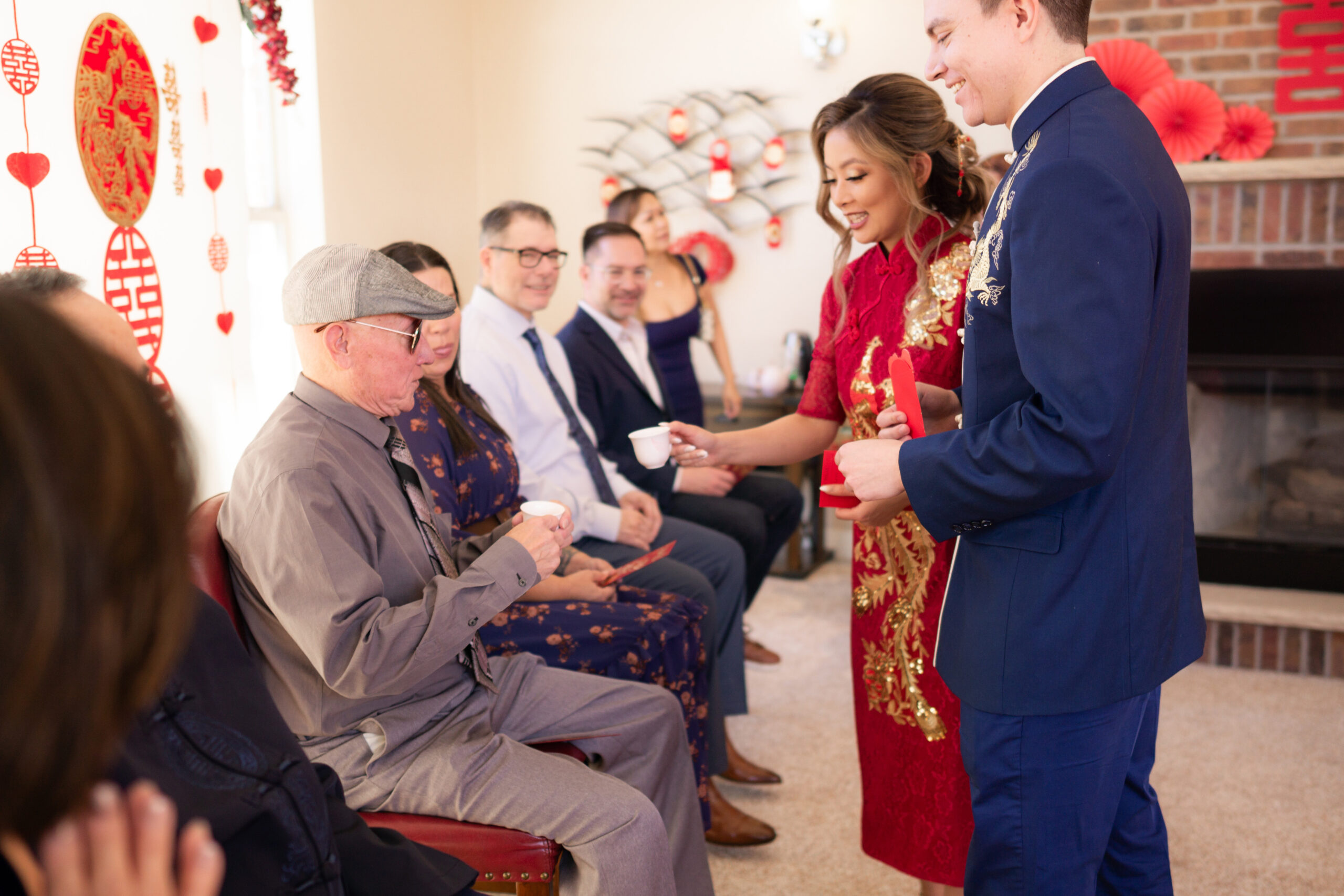
During the tea ceremony, elders will likely also give the couple gifts in the form of jewelry or “hong bao” aka red envelopes, and recite well wishes, so keep in mind this may take an extra bit of time. It will take about 4 mins for a single person and 6 minutes for a pair. My tip would be to add extra 20 minutes on top of that time to get a total time to budget for the tea ceremony.
Where do tea ceremonies take place?
Chinese families traditionally have two tea ceremonies (one at bride’s family house and one at groom’s family house). Vietnamese families usually only have one. If the bride’s house is spacious enough, that is the ideal venue for the tea ceremony. In this modern day, couples are already living together and will host their tea ceremonies in their own home.
Nowadays, some couples will opt to have the tea ceremony at their wedding venue. They will weave it into their Western ceremony, host it after the Western ceremony, or hold it during cocktail hour.
Couples also sometimes have a small tea ceremony at their getting-ready hotels before heading to the venue. There are lots of options here, so don’t feel like you need to be confined to what’s “right” or “wrong.”
Sample tea ceremony timeline
What I love most about the tea ceremony is that they aren’t about perfection, they’re about presence. It’s the quiet heartbeat of a wedding day: intimate and timeless.
Here’s a general timeline for a Vietnamese or Chinese tea ceremony if you are hosting in the morning. Keep in mind that this a sample timeline. You do not have to follow it to a T; lots of couples adapt the traditions and make it their own.
7-10am: Getting Ready
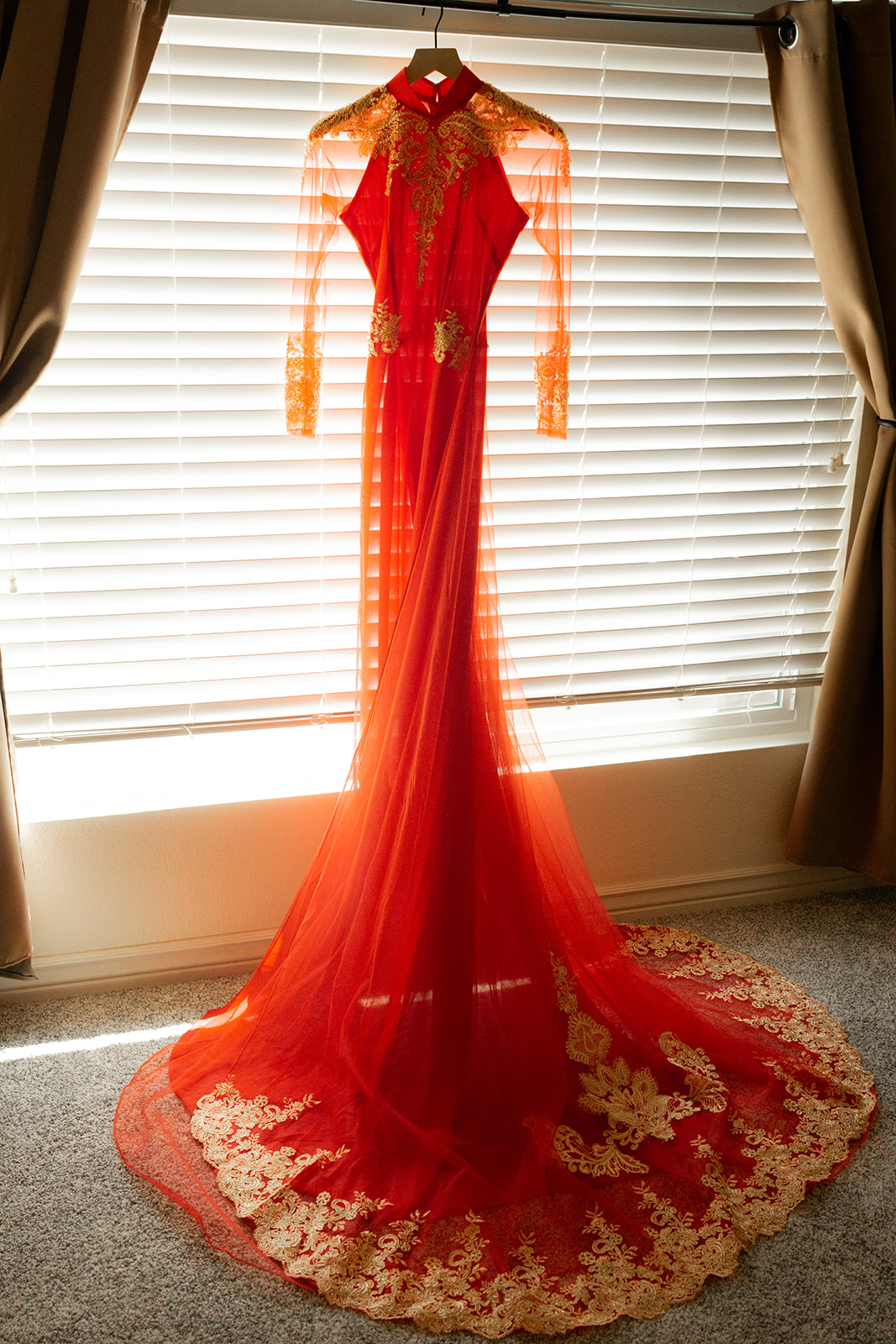
The hair and makeup artist teams will arrive early. Before the bride gets in her dress, the photo and video team will arrive to start documenting the day. They take shots of the bride getting ready, including the details, like dress, accessories, the venue, as well as behind-the-scenes moments, and bridesmaid group pictures.
10-11am: Groom’s Arrival & Gatecrashing Games
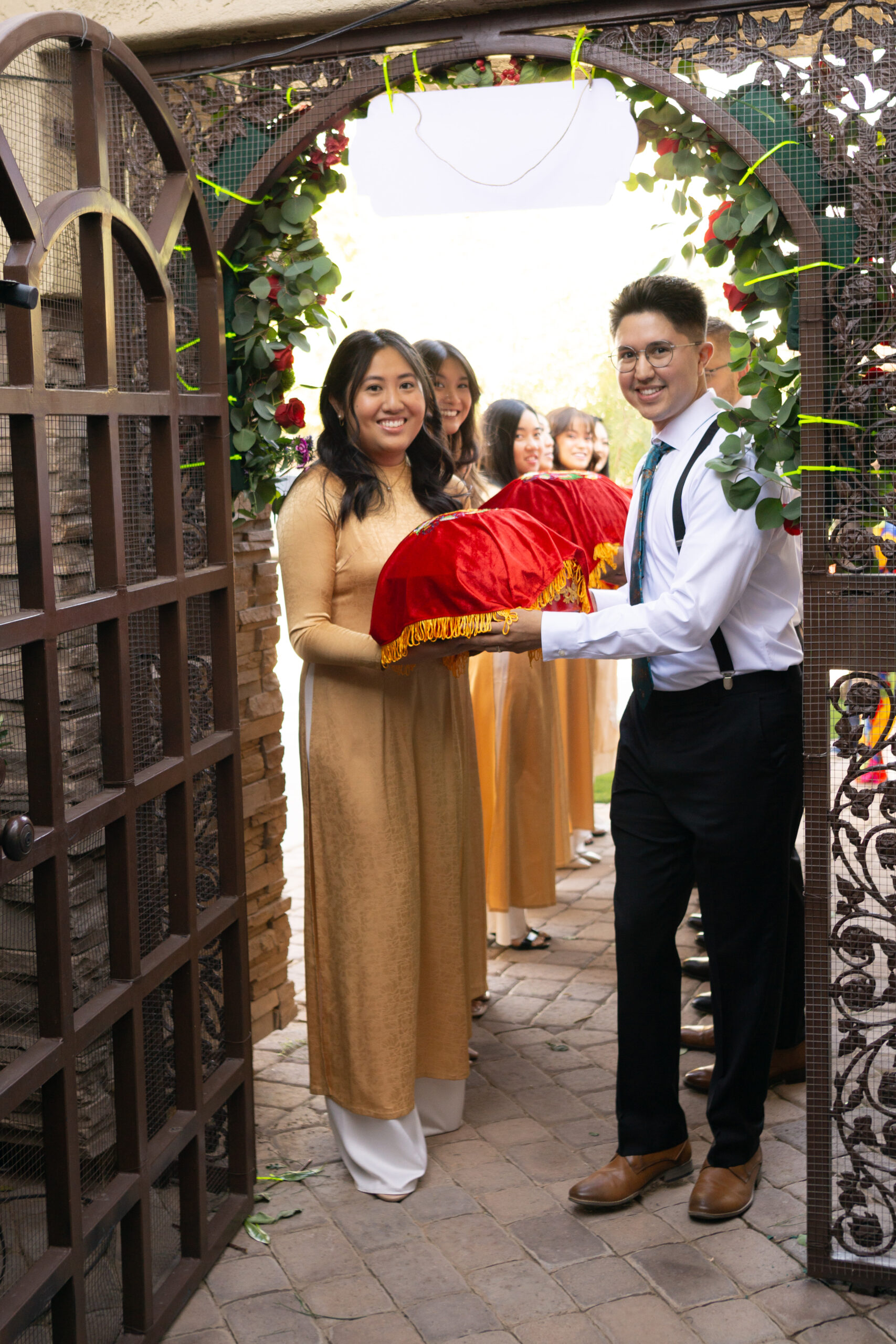
The groom, his family, and groomsmen arrive at bride’s home (could be her parent’s home, a venue, or even an Airbnb, etc.) to ask for her hand in marriage and offer gifts. Someone from the bride’s family opens the door for the groom and asks for gifts. The bridal party will lead the groomsmen through a series of games to see if they are worthy of winning over the bride.
What gifts does the groom’s side bring in a Vietnamese tea ceremony?
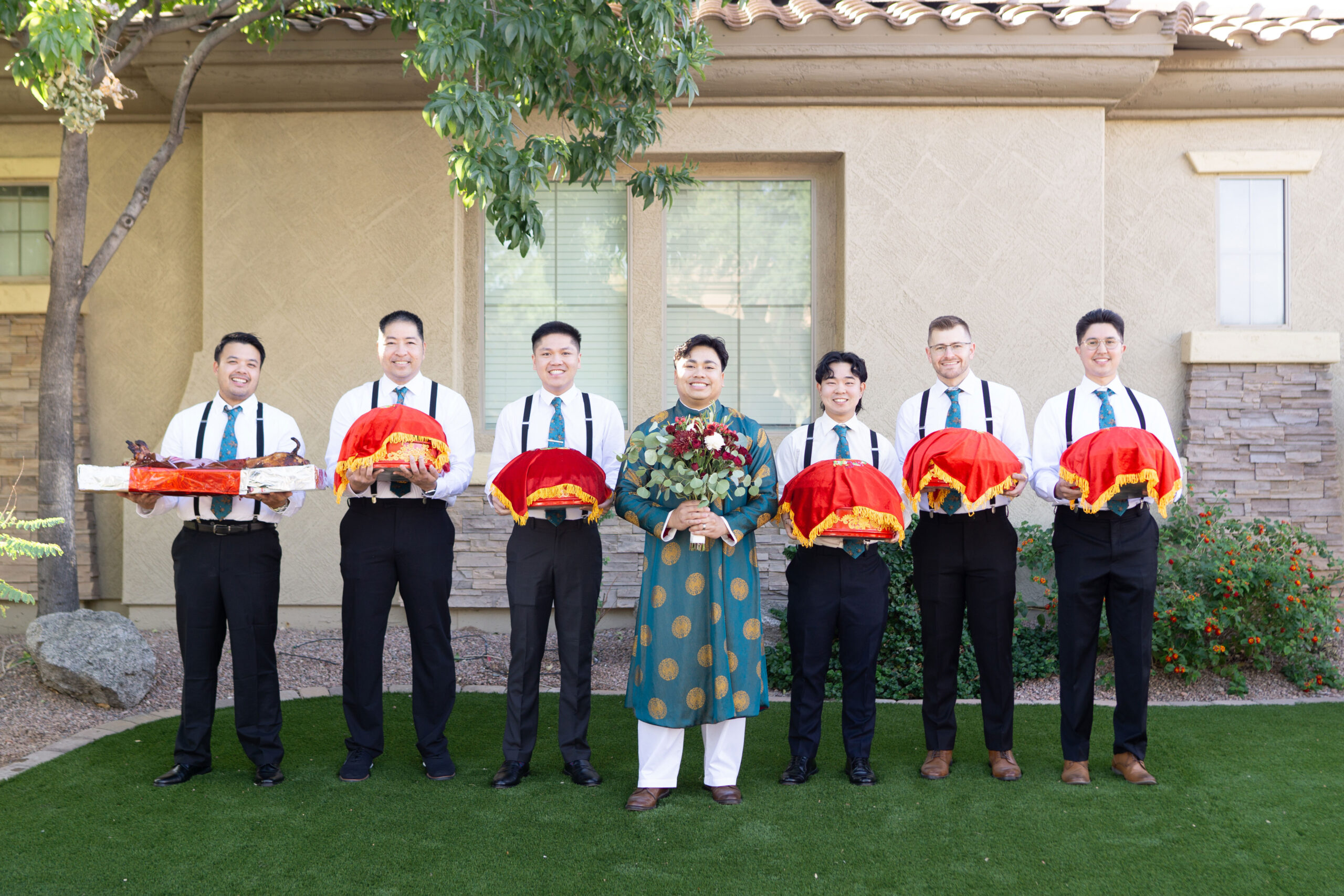
In Vietnamese tea ceremonies, the groom’s family will bring a roasted pig, and an array of mâm quả, red gift trays, of betel and palm leaves, wine or other alcohol, tea, fruits, traditional cakes, tobacco, and jewelry.
11am-12pm: Tea Ceremony Begins
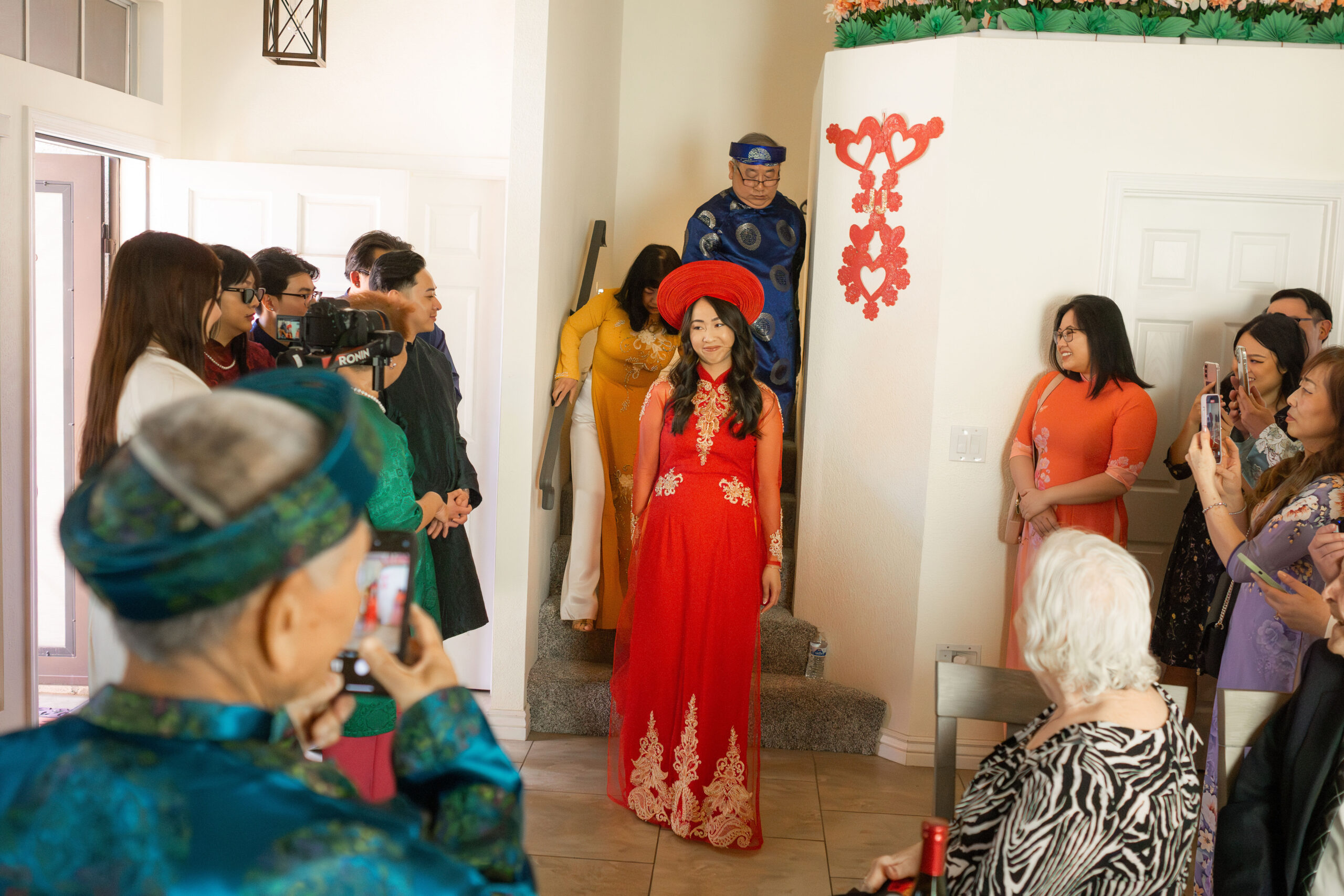
Bride’s family welcomes groom’s family inside. A member of each family introduces the other side of the family to one another. The bride is eventually brought out by a family member.
Someone from the groom’s side will gift the bride with jewelry and help her put in on. Her parents may do the same. Afterwards, they serve tea to their elders.
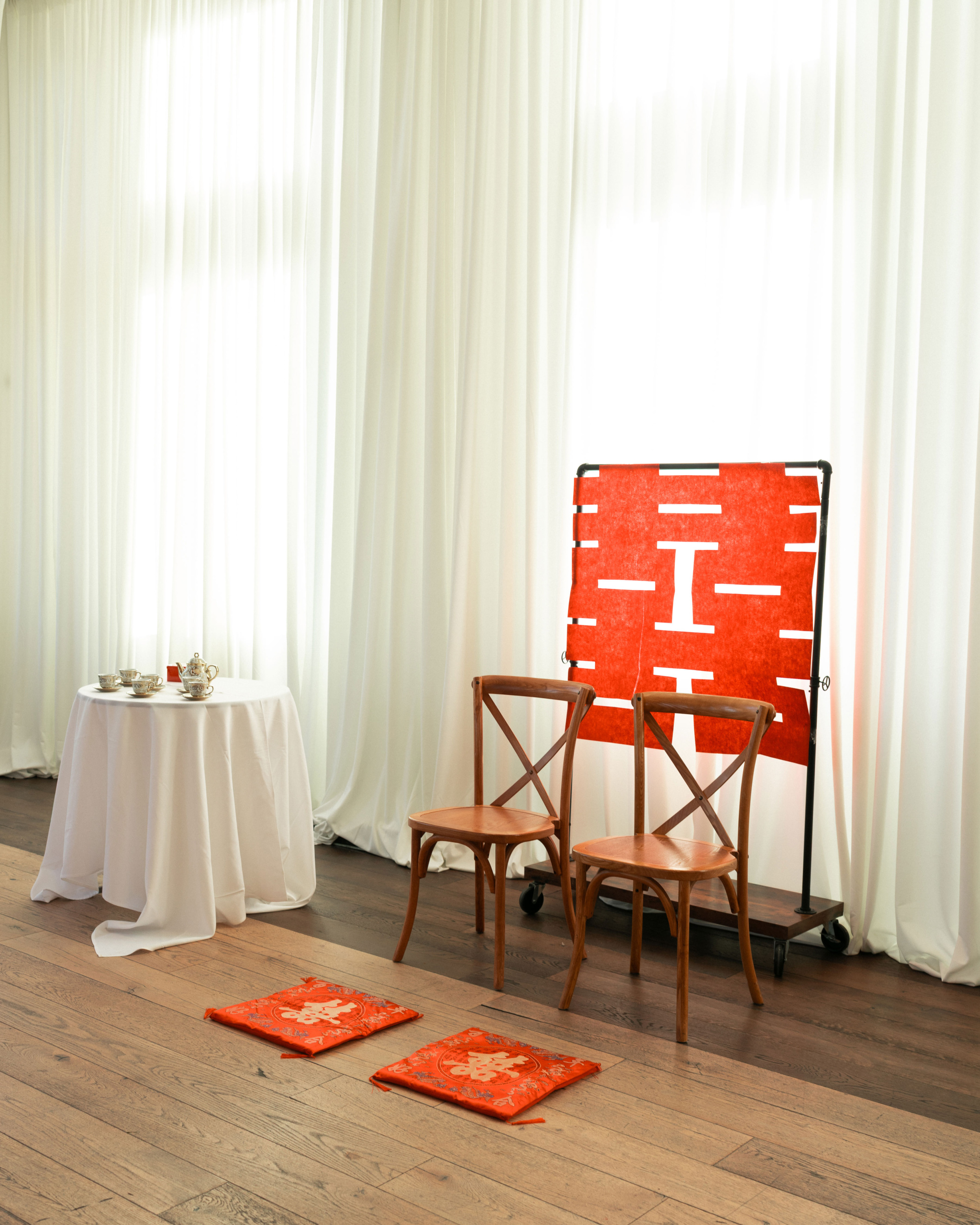
Set up two chairs or a bench for the elders as well as a table to hold the tea nearby. Designate someone who can read the relative’s names off the list. Ask members of the wedding party to prepare the tea into the cups, and place the tea cups on the tea cup tray to give to the couple. The couple will offer tea to their relatives and the relatives will put the tea cups back on the tray after they are done drinking the tea. The process will start over for the next round until everyone on the list has been served.
2-4pm: Photos
After lunch, the couple can take formal photos with family and other important guests. The newlyweds will also take photos with the bridesmaids and groomsmen, or prepare for another outfit change.
What You Need for Your Tea Ceremony
- A pair of red kneeling cushions
- Tea leaves or tea bags
- Boiling water to brewing tea
- Tea pot with cups (pro tip: you can use paper cups to make things easier)
- A list of who to serve tea to
- Arrange for bridesmaids to assist with preparing the tea and handing the teacups to you
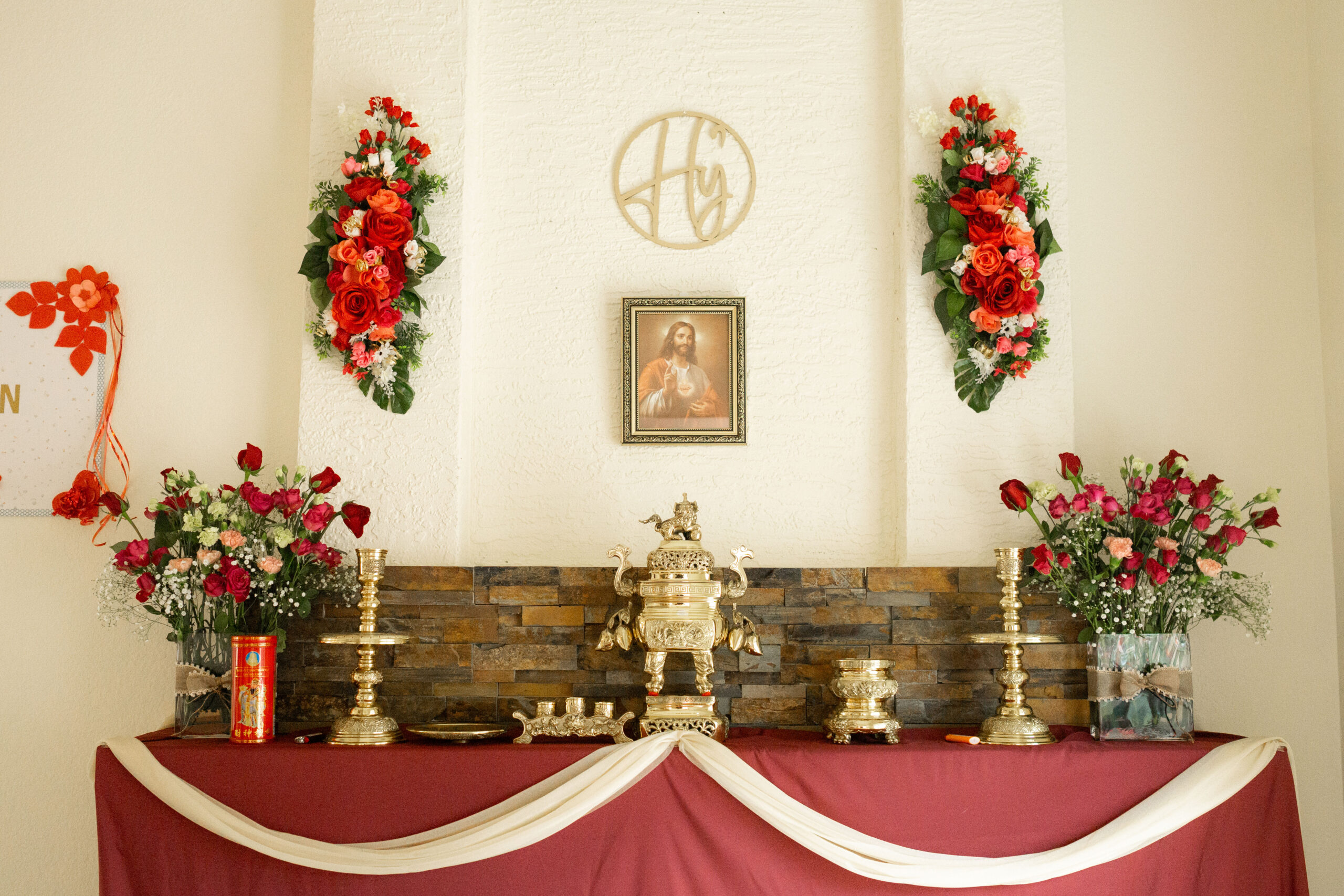
- Decorations
- Red envelopes, optional
What to Wear to a Vietnamese Tea Ceremony
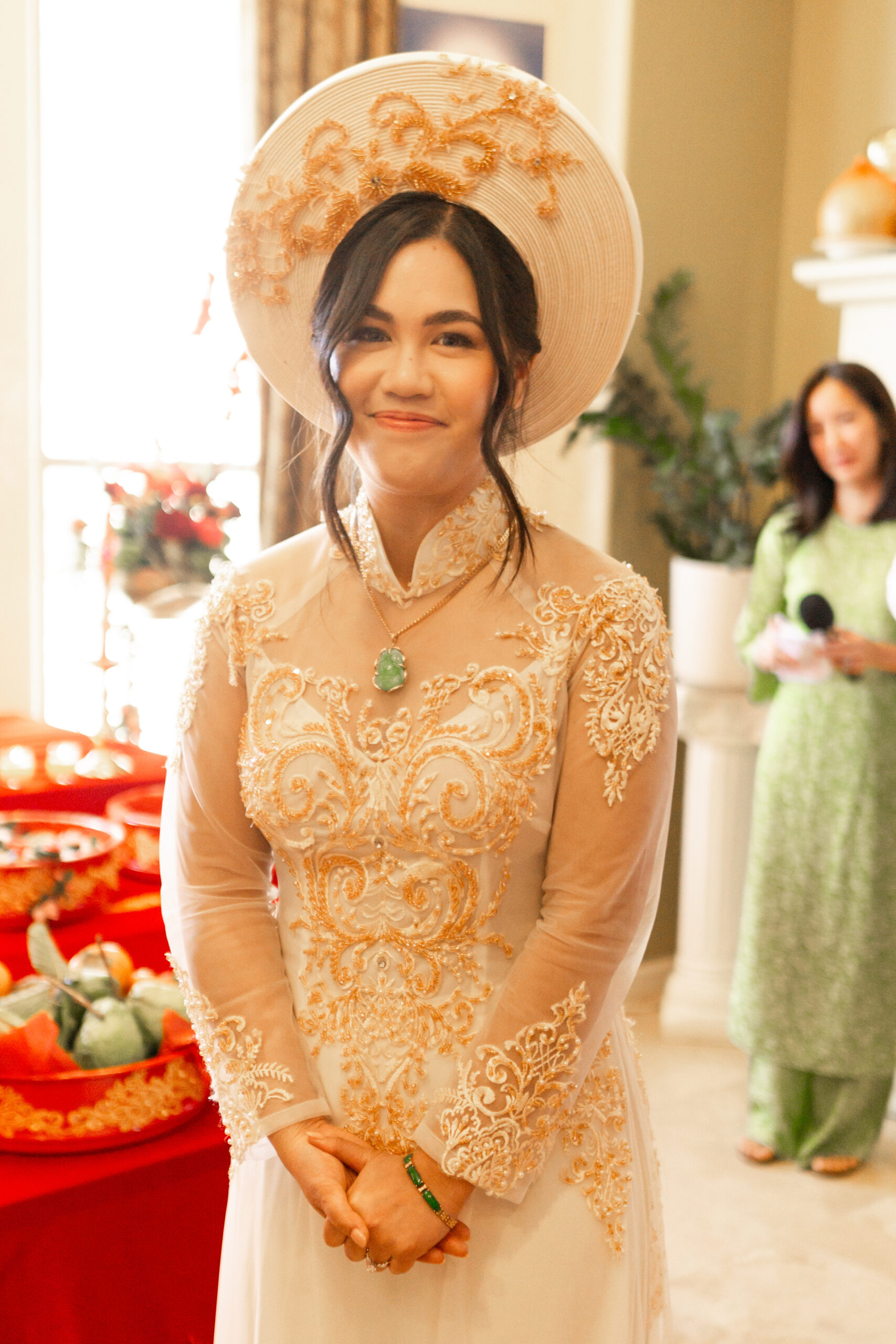
For Vietnamese weddings, the traditional attire is the áo dài, a long, form-fitting silk tunic worn over matching pants. It’s elegant, regal, and deeply symbolic, often custom-made to reflect couple’s personality.
Bride: Brides usually wear a red or gold áo dài, colors that represent luck, prosperity, and happiness. The fabric is often detailed with intricate embroidery, phoenix or dragon motifs, and paired with a khăn đóng (circular headdress). Some brides choose to match their áo dài with modern elements like sheer sleeves, subtle beading, or a train for a fusion of tradition and contemporary style.
Groom: Grooms traditionally wear a coordinating áo dài in complementary colors. Theirs will often feature a simpler design or matching embroidery to the bride’s. Many modern grooms pair the áo dài with the same tailored pants they wear with their suits.
Family and friends: family often wears áo dài in coordinated tones to create a cohesive, elegant visual during the ceremony. It’s a beautiful way to show unity between both sides of the family.